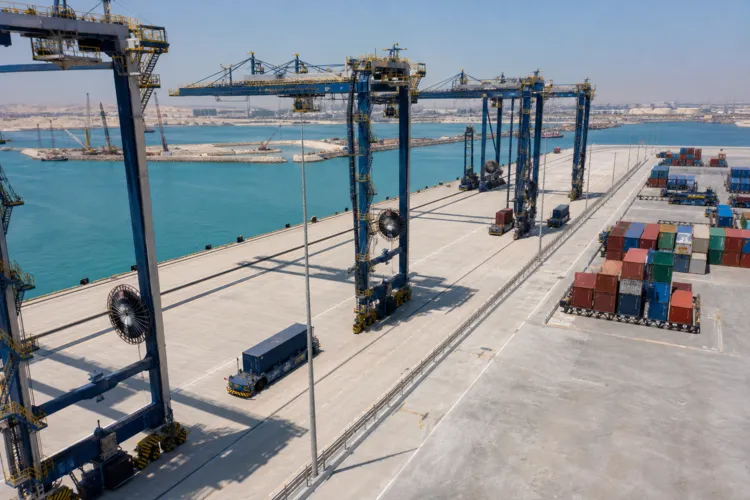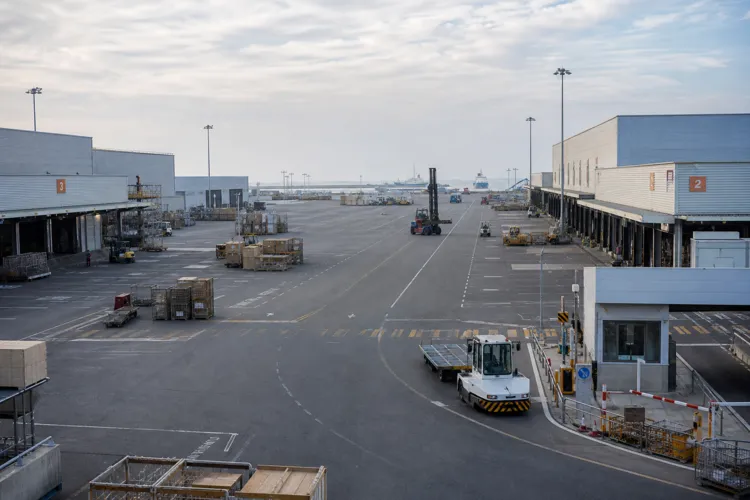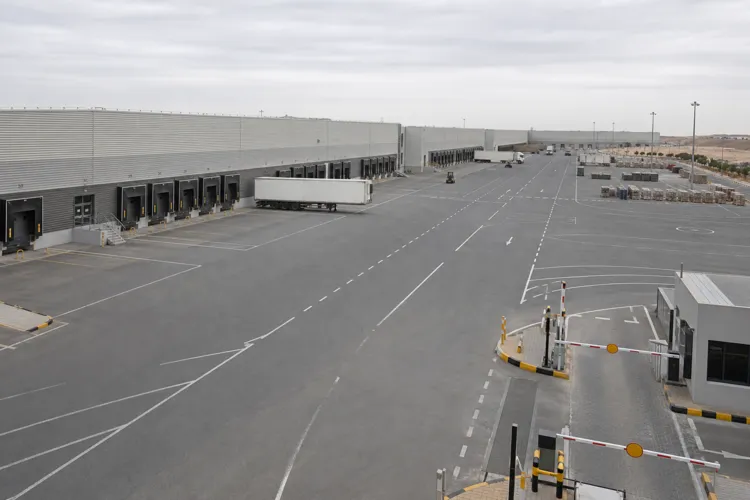

The Strait of Hormuz has become a severe constraint on Gulf shipping. Al Jazeera reported traffic through the 33km chokepoint fell from more than 100 vessels a day to just five. The same report noted that about 80% of world trade by volume moves by sea at some point, highlighting why disruption quickly spreads across supply chains. With Gulf ports harder to reach by direct sea freight from Asia, alternatives on the Red Sea side matter more. Saudi Arabia’s Red Sea gateways, especially Jeddah, are increasingly positioned as receiving points for cargo that cannot move normally through Hormuz.
Saudi Arabia’s ports authority, Mawani, launched a Logistics Corridors Initiative to handle cargo redirected away from ports in the kingdom’s eastern region and from ports in GCC countries. On a visit to Jeddah Islamic Port, transport minister and Mawani chairman Saleh bin Nasser Al Jasser said the initiative aims to create operational corridors dedicated to receiving containers and cargo at Jeddah and other Red Sea ports, to enhance supply chain efficiency and facilitate cargo movement between Saudi ports. The Loadstar described Jeddah and King Abdullah as the two gateways that could conceivably supply the cargo needs of the UAE, Qatar, and Bahrain if nearby alternatives are knocked offline.
Jeddah’s Vessel Queue Signals a Shift in Routing
Early signs of diversion show up in vessel positioning. Xeneta’s eeSea liner database showed five vessels at berth in Jeddah and another four waiting to be docked. It also listed 25 vessels en route to the port and due to arrive by the end of the month. Of those inbound ships, 16 were assigned to scheduled services that regularly call at Jeddah, while nine were unassigned, suggesting inducement sailings. Carriers are also making tactical requests: the Loadstar reported Japanese carrier ONE asked Gulf shippers to return its empty containers to either Sohar in Oman or Jeddah, reinforcing the idea that equipment and flows are being rebalanced toward Red Sea entry points.
Service patterns are changing alongside these queues. The Loadstar reported Gemini partners Maersk and Hapag-Lloyd launched a new Asia-Mediterranean AE19/SE4 service that includes a call at Jeddah, accessed via the Suez Canal. At the same time, other corridors face instability. Lloyd’s List reported preliminary tracking data for July 27 to August 2 recorded 266 transits, and said overall traffic had settled back to levels last seen in early 2026, before the Strait of Hormuz disruption temporarily boosted Red Sea volumes. It also reported vessel traffic through the Bab el Mandeb Strait fell by almost a quarter after the Houthis imposed a maritime blockade on Saudi Arabia, showing that rerouting decisions are being made under overlapping constraints.
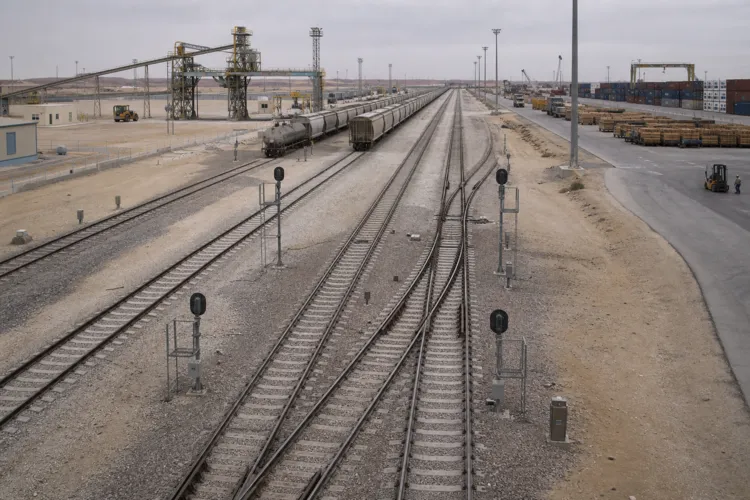
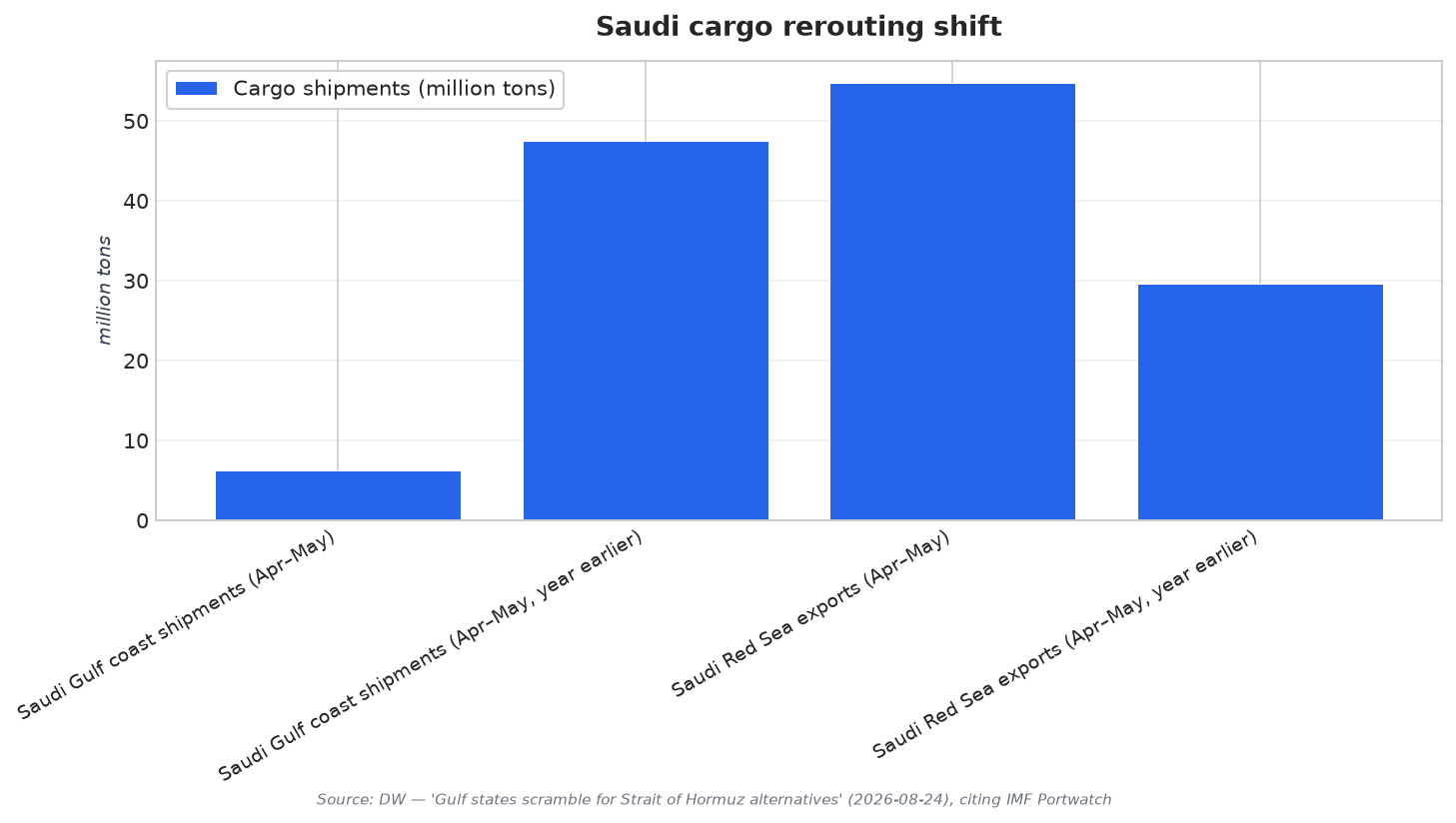
Beyond containers, Saudi routing options also affect energy and multimodal cargo continuity. DW reported that during April and May, Saudi cargo shipments from its Gulf coast fell from 47.5 million tons a year earlier to 6.3 million tons, while exports through the Red Sea rose from 29.6 million to 54.8 million tons; the additional 25.2 million tons replaced roughly 61% of the volume lost on the Persian Gulf side. Carra Globe noted Saudi Arabia’s East-West pipeline connects Gulf production to Yanbu on the Red Sea as an alternative export route for crude, while also warning that for imports Saudi still faces the Hormuz chokepoint. Mawani’s initiative also includes sea-air and air freight elements, with Saudia Cargo describing new sea-to-air logistics routes via western coast ports to safeguard supply chain continuity when shipping patterns and flight schedules are affected.
How is Strait of Hormuz rerouting affecting Saudi Arabia’s Red Sea ports?
What do the latest vessel counts suggest about congestion at Jeddah?
Which shipping service changes are tied to the shift toward Jeddah?
What tonnage shift did DW report for Saudi cargo moving away from the Gulf coast?
Talk to us for your needs in:
- Identifying Suitable Warehouse Sites in Saudi Arabia
- Customized Logistics and Supply Chain Analytics
- Logistics Network Design and Optimization
- Green Supply Chain and Sustainable Logistics Solutions
- Supply Chain Risk Management and Compliance
- Advanced Supply Chain Resilience and Agility
- Logistics Market Research and Strategic Analysis
- In-Depth Market Survey for Logistics
- Market Intelligence and Insights in Logistics
- Feasibility Study and Assessment in Logistics
- Integrated Warehousing Management Solutions
- Smart Warehousing and Automation Systems
- Sustainable and Green Warehousing Practices
- Port and Airport Logistics Optimization
- Digital Logistics Solutions
- Saudi Logistics Benchmarking